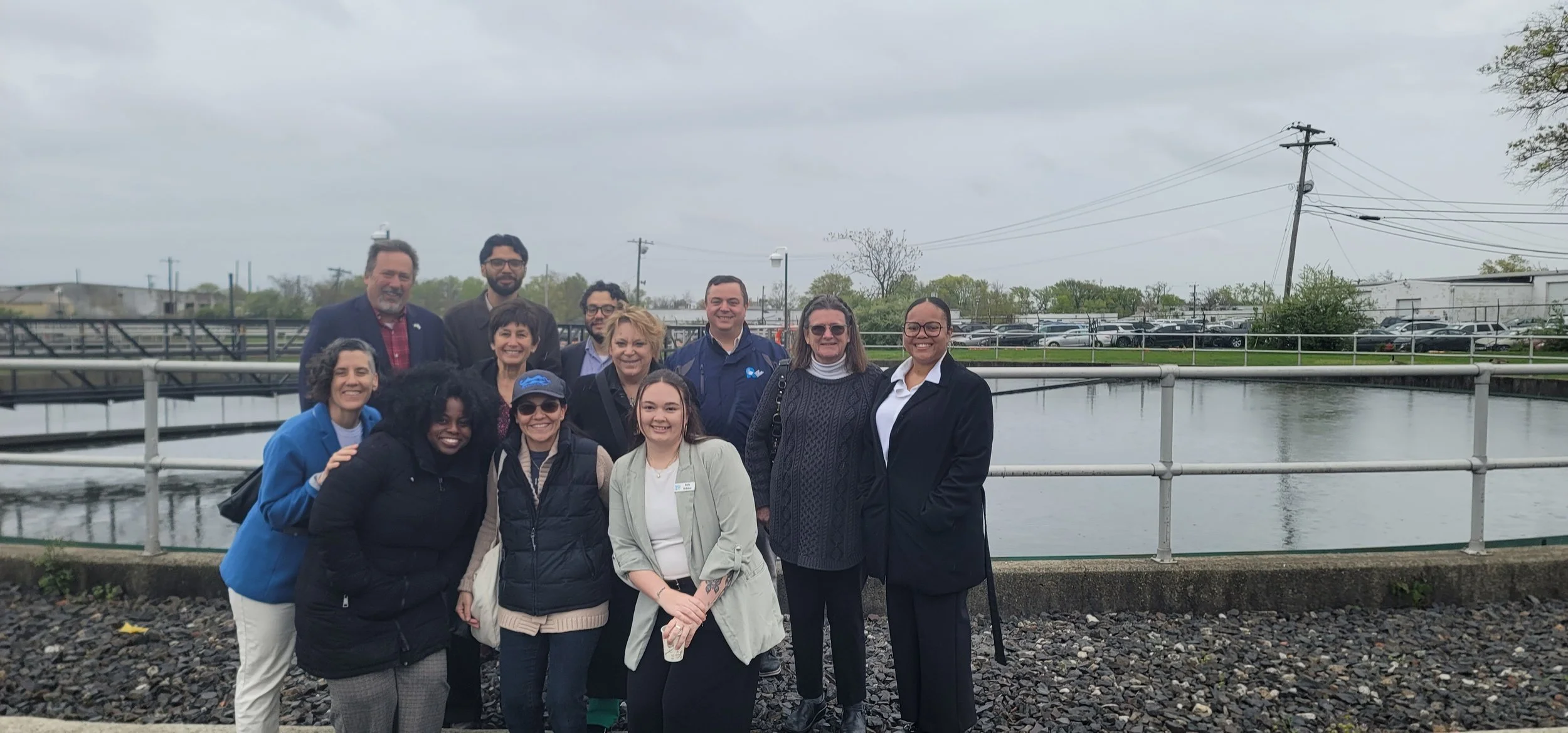
On Earth Day this year, an invitation-only hearing in Trenton took place to gut the Resilient Environments and Landscapes (REAL) Rules meant to strengthen NJ’s land use, flood hazard and stormwater regulations to address climate crisis. While that dismaying closed-door negotiation was taking place, Waterspirit was spending our energy creating new connections in the water industry. We got together with water and conservation advocates in Rahway, courtesy of the New Jersey League of Conservation Voters Education Fund, for a tour of the Rahway Valley Sewerage Authority.
The tour highlighted a multi-stage treatment process designed to protect sacred Earth and maintain consistent service rates. We often teach our program participants about the journey water takes from our residences to the sea, and this close-up experience with this important phase in that journey was especially interesting.
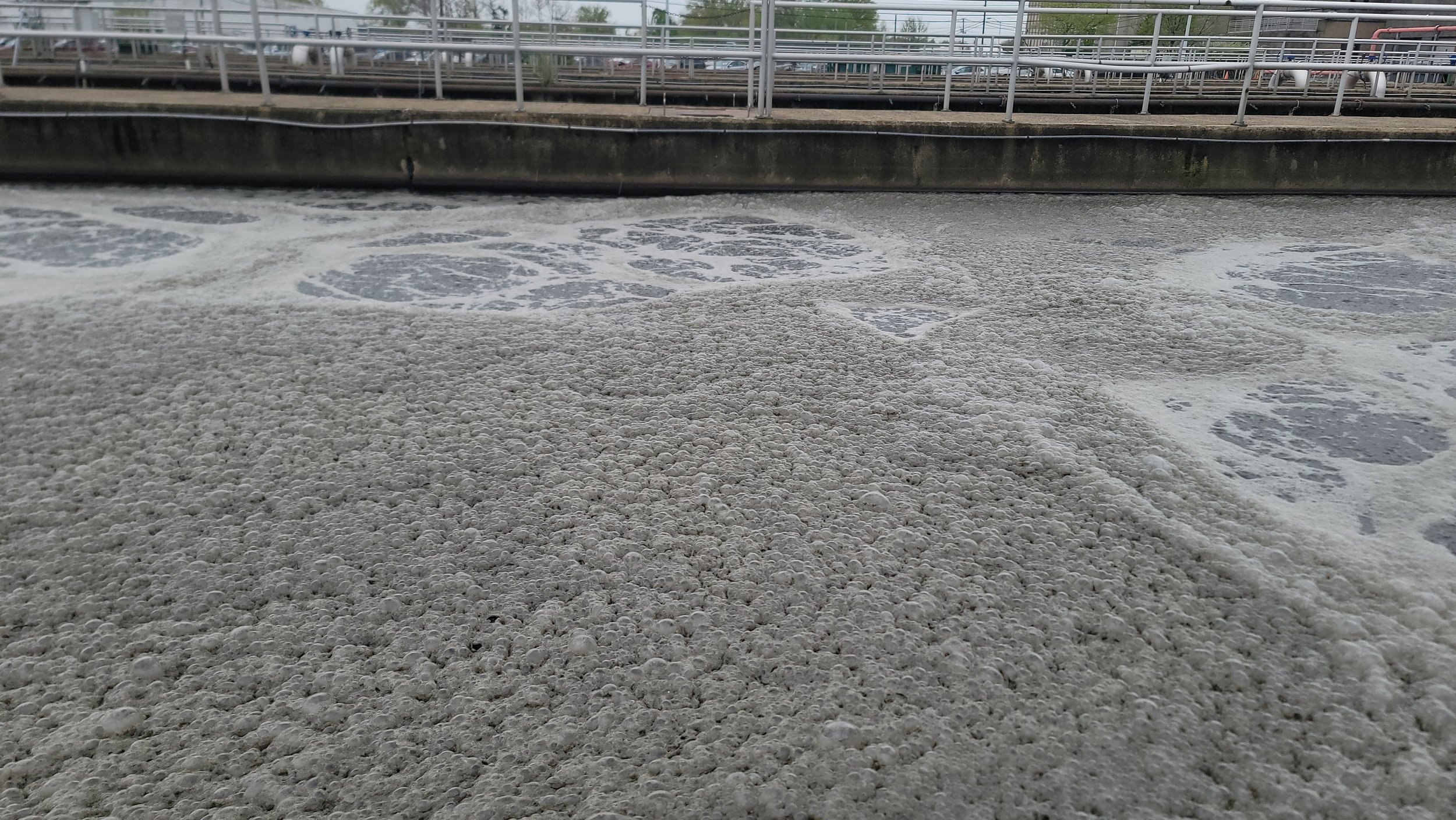
Did you know, according to the Environmental Protection Agency (EPA), that a typical household uses approximately 100 gallons of water per person, per day? The wastewater from our residences travels through various municipal sewer systems and flows into a main trunk sewer, which then flows into the treatment facility. First, screens remove large debris and grit stemming from wastewater. Through aeration tanks, the biological-activated sludge and air work together to break down organic substances. Finally, the remaining sludge is settled and either recovered for reuse or removed. There was methane firing on site visible from the facility tour.
The combined heat power facility produces 6.2 MW of power, currently offsetting plant energy costs by 25% with a goal of becoming net zero. We learned that the long term goal is to make use of their space and optimizing their engines for solar power this year. How exciting! Waterspirit is supportive of solar power given its minimal use of water, the increase in affordability for all rate payers, and the realistic possibility of powering everything we do with the sun’s radiating energy.
After the tour, we talked about the critical issue of PFAS (dubbed “forever chemicals”) and our aligned goal of preventing the problem at the source before it hits water and wastewater systems. If manufacturers use alternatives to PFAS and microplastics that are not harmful or polluting, the prevalence of forever chemicals and microplastics in our waterways would cease to exist.
There is much work to be done to protect sacred water: wastewater, groundwater, drinking water and stormwater alike. Join us to learn more about water conservation efforts and communicating with your local municipality or county about ways to amplify messaging. water@waterspirit.org